 Donate

Category: Featured
At UNGA, Global Leaders Convene to Help Proven Maternal Health Solutions Reach More Mothers
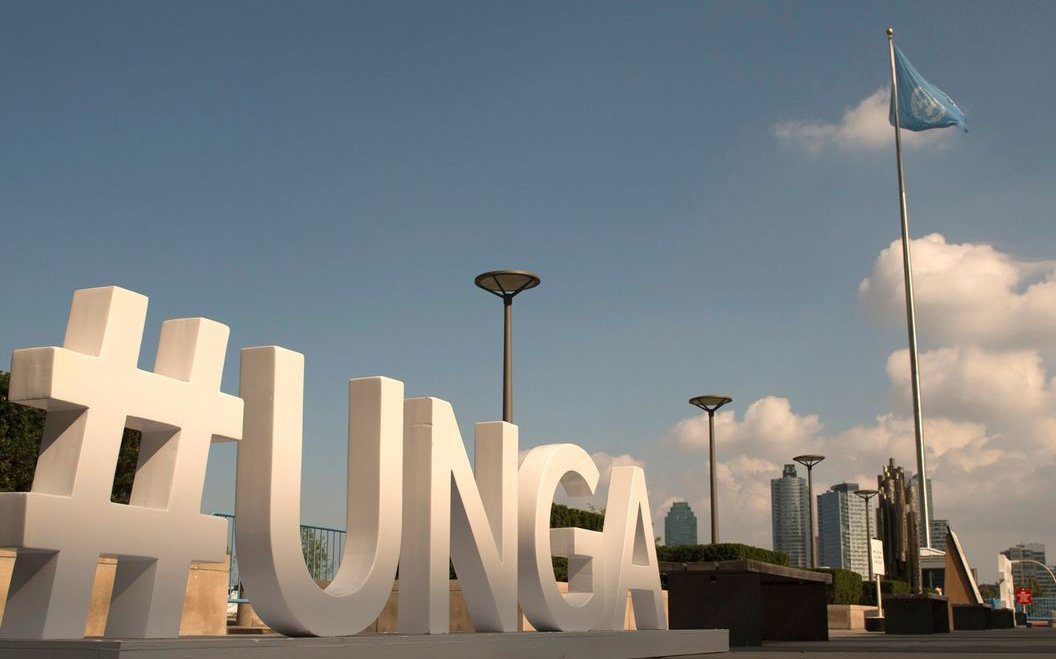
NEW YORK — During the United Nations General Assembly High-Level Week, global leaders from the private sector, government, philanthropy, and NGOs will come together to address a critical global health challenge: proven, life-saving medical solutions already exist, but too often fail to reach the mothers and babies who need them.
On September 21, the Every Pregnancy Coalition, the Gates Foundation, the Federal Government of Nigeria, and Philips will host From Pipeline to Pregnancy: Unlocking the Final Step at Goals House, at Tavern on the Green in New York. The gathering will bring together a cross-sector group of leaders who play a role in ensuring that lifesaving medical products reach mothers and babies in countries affected by emergencies or conflict.
Approximately 260,000 women globally died during or following pregnancy and childbirth in 2023, despite the existence of proven interventions, technical expertise and trained health workers that can prevent many maternal deaths. The challenge is particularly acute in fragile settings.
A solution only saves lives if it reaches mothers and babies.
Yet lifesaving medicines and tools often do not reach mothers and their babies. Getting these solutions to mothers and babies requires financing, regulatory approvals, procurement policies, supply systems, and trained health workers.
The challenge, therefore, is not simply whether solutions exist, but whether we can connect the people, systems and resources needed to get them into the hands of health workers and, ultimately, to every mother and baby who needs them.
Every Pregnancy is a global coalition of organizations working to change this. It brings together more than 80 organizations working across 25 countries to raise funds, advocate, and collaborate so that more mothers and babies survive pregnancy and childbirth.
This initiative by a collective of organizations is particularly relevant during the 81st United Nations General Assembly, convened under the theme “Restoring Trust, Managing Transformation: A United Nations that Delivers for All.” For healthcare to be available to all, proven medical solutions should not stop at research, approval, or procurement, but should reach mothers and babies everywhere. To make this a reality, partnership is needed.
At UNGA, Every Pregnancy is bringing its collaborative coalition model into a global conversation, showing how governments, funders, innovators, health systems, NGOs and communities can work together to improve healthcare..
Closing the gap requires everyone to play a role: policymakers and funders shape priorities and resources; innovators help design solutions that meet women’s needs; health workers deliver care; and community and faith leaders help build the trust and access that allow care to reach families effectively.
The gathering will focus on how these different actors can work together more effectively, so that proven medical products reach every mother and baby who needs them.
How to move from collaboration to action?
“UNGA gives us a rare opportunity to bring together the institutions that influence different parts of the maternal health pathway,” said Isra Chaker, Founder and CEO of Every Pregnancy. “No single organization can close these gaps alone. Our role is to connect people, resources, and expertise—and to turn that alignment into action.”
“Many of the mothers dying today could be saved with interventions we already have,” said Dr. Zaher Sahloul, CEO and Co-Founder of MedGlobal, a member of the Coalition. “Faith and medicine both call us to act. Communities can help mobilize resources, build trust and close some of the most persistent gaps in global health.”
“We often underestimate what it takes to get even a low-cost, life-saving solution to mothers in remote areas and crisis zones,” said Mazen Mokhtar, CEO of Baitulmaal, Coalition member. “Working through coalitions like Every Pregnancy helps connect the systems, support and expertise needed to reach mothers and babies where care is hardest to access.”
The September 21 gathering is intended to build momentum that continues beyond UNGA. Participants will identify where their institutions can contribute through financing, policy, partnership, innovation, implementation, or other forms of support, and how those contributions can be carried forward into sustained collaboration toward a shared goal: a world where every pregnancy is safe.
About Every Pregnancy
Every Pregnancy is a global maternal and newborn health coalition of more than 80 organizations working across 25 countries, bringing together financing, local leadership, technical expertise and proven care to strengthen the maternal health pathway and help more mothers and babies access the care they need. The session was made possible by two organizations in the Coalition: MedGlobal and Baitulmaal.
About MedGlobal
MedGlobal is a global health and humanitarian organization working to address healthcare disparities in vulnerable and fragile settings. Through emergency response, health service delivery and sustainable programming, MedGlobal provides lifesaving care and works to strengthen health systems for communities affected by conflict, displacement, disasters and other crises.
About Baitulmaal
Baitulmaal is a humanitarian organization providing life-saving, life-sustaining and life-enriching assistance to underserved populations around the world, regardless of faith or nationality. Its work connects donor support with communities in need to provide humanitarian relief and restore hope.
Alongside Khartoum’s Recovering Health System
Alongside Khartoum’s Recovering Health System
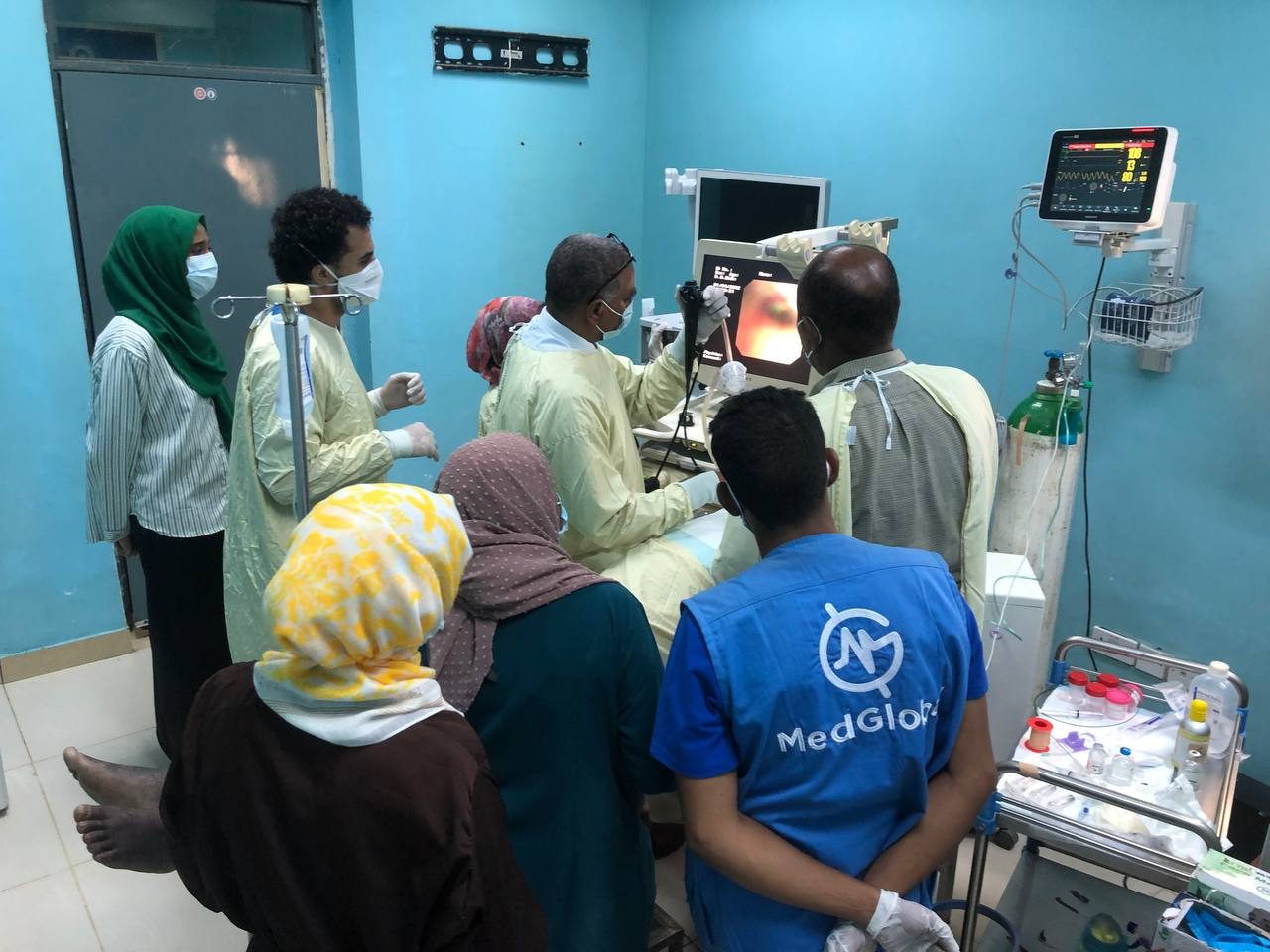
As people return to Khartoum and communities begin to rebuild after years of conflict, a 14-day Resiliency Medical Mission brought specialist care, hands-on training and mentorship alongside Sudanese healthcare professionals navigating the long work of recovery.
Around a table at Bashair University Hospital in Khartoum, physicians gathered for a hands-on session on chest tube insertion.
Dr. Es-Haq S. Hassanin, a pulmonary and critical care fellow, covered different approaches to chest tube insertion and gave participants hands-on experience with the procedure.
The session was part of a broader training program delivered during MedGlobal’s Resiliency Medical Mission in Khartoum in July 2026. Across the mission, 10 educational sessions and workshops recorded 311 attendances, covering areas including emergency care, pediatrics, diagnostic imaging, point-of-care ultrasound, chest tube insertion, hand surgery and burn management.
“There is a really big need for training the future physicians and current physicians who are in training,” Hassanin said.
A health system restoring services
Bashair University Hospital serves communities in southern Khartoum and is providing care in a health system affected by years of conflict, including disruption to services, damage to infrastructure and equipment, and the loss of experienced healthcare professionals.
For Dr. Aman Alawad, MedGlobal’s Sudan Country Director, one of the clearest measures of recovery is the return of the people who make those services possible.
“The most encouraging signs of recovery are the healthcare workforce returning to duty in Khartoum, alongside the revival of medical internship programs and educational training.”
Dr. Aman Alawad
MedGlobal Sudan Country Director
Care delivered alongside local teams
Four U.S.-based volunteer physicians brought complementary specialties to the mission: Dr. Myles M. Dickason in emergency medicine, Dr. Es-Haq S. Hassanin in internal medicine with pulmonary and critical care expertise, Dr. Mir Ali in pediatrics, and Dr. Syed Sayeed in plastic and reconstructive surgery.
Across the 14-day mission, the team recorded 225 documented patient encounters across outpatient, emergency and inpatient settings.
In emergency medicine, Dickason combined direct patient care with an assessment of emergency department operations, identifying opportunities to strengthen how patients are assessed, treated and referred within the existing system. He worked with clinical staff, participated in ward rounds and contributed to training on vital signs, triage and sepsis recognition.
Ali worked across outpatient, emergency and inpatient pediatric care. He participated in regular ward and discharge rounds alongside local physicians, working within the hospital’s existing clinical and teaching structures. Pediatrics accounted for the largest share of the mission’s documented clinical activity, with 110 patient encounters.
Hassanin provided internal medicine and pulmonary care across ward, emergency and outpatient settings. His training sessions included thoracic imaging, point-of-care chest ultrasound and chest tube insertion.
Sayeed worked alongside local surgical teams in trauma care, emergency procedures and operations. His work also extended to Omdurman Hospital, where he supervised operations while providing hands-on teaching and case-based discussion with resident surgeons.
Restoring services involves more than reopening hospital doors. Alongside their clinical work, the four specialists met with hospital leadership and clinical staff on challenges ranging from emergency care and patient flow to infection prevention and workforce capacity.
Capacity that remains
The clinical work and teaching ran together across the two weeks, with sessions addressing needs in the same departments where the specialists were treating patients.
“We were able to get their hands-on experience and now they’ll be ready to hopefully put chest tubes in the future in case the need arises.”
Dr. Es-Haq S. Hassanin
MedGlobal Volunteer Physician
The mission also created opportunities for mentorship beyond individual clinical skills. Alawad said the RMM provided healthcare professionals with “critical mentorship, motivation for professional development, and clarity on career pathways.”
That emphasis carried into a one-day medical conference convened by MedGlobal with Bashair University Hospital and Al Neelain University. Seventy participants attended, including medical students, medical officers, residents and specialists.
Members of the visiting team presented cases alongside house officers, bringing the clinical and educational sides of the mission together. Participants discussed cases encountered during the mission, approaches to care and some of the broader challenges facing the health system. The program also included career guidance and engagement with hospital and university leadership.
The co-presentation format placed junior Sudanese clinicians not only in the audience, but alongside visiting specialists in presenting and discussing the work.
MedGlobal has worked in Sudan since 2019, supporting health facilities and healthcare professionals as they respond to immediate needs while strengthening services over the longer term. Resiliency Medical Missions are one part of that work, connecting volunteer specialists with local counterparts for clinical care, training and technical collaboration.
Fourteen days did not rebuild Khartoum’s health system. What the mission offered was specialist support for a short period, and training that stays with the physicians who took part.
The Sudanese healthcare professionals working alongside the visiting specialists were caring for patients before they arrived and continued after they left. That continuity was central to the RMM’s approach.